How to check if your Gmail account has been hacked
June 2, 2011 / by Marco / Categories : Business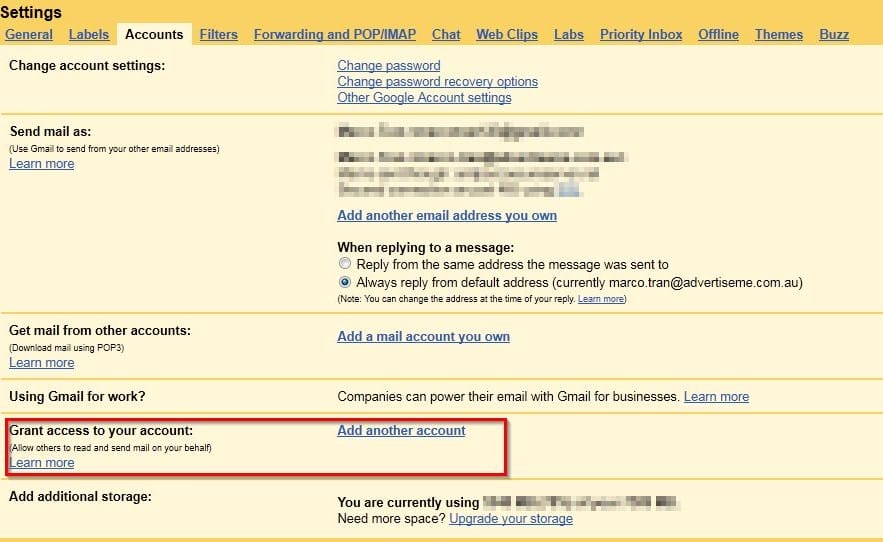
Firstly, my Gmail account hasn’t been hacked yet, but I came across a journalist that did. You’ve probably heard in the media that several Gmail accounts have been hacked. In this post I just wanted to share with you how you can confirm whether you’ve been hacked and what you can do about it.
To confirm whether you’ve been hacked, login to your Gmail account. Click the options icon in the top right hand corner. Then click mail settings.
Click on the accounts tab and check the “Grant access to your account” section as shown below.
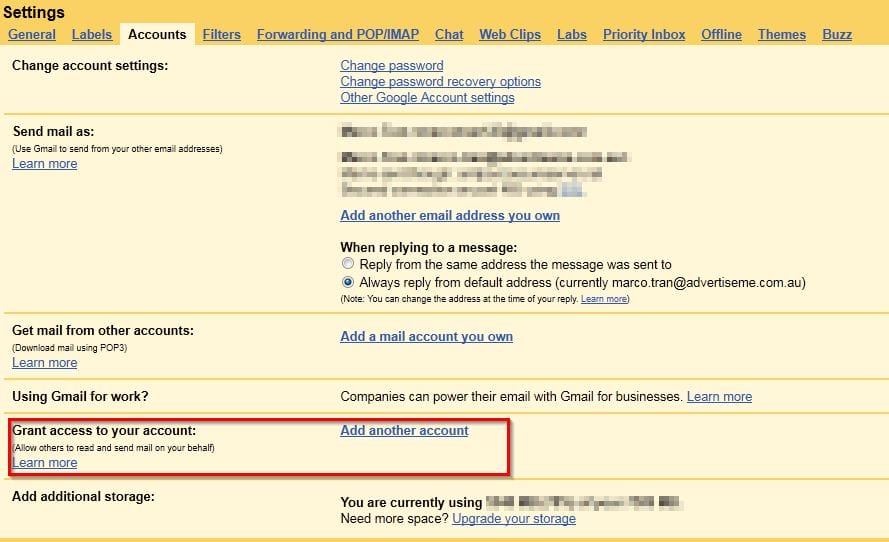
If there’s people that has been added to the list that you’ve never added before then you’ve been hacked. Delete them immediately…. but before you delete them take a screenshot as evidence and send it to us. We’ll post it here other can be aware of the culprits.
You may also want to just look at your sent items to make sure they did not use your gmail account to send inappropriate emails.
If you have, or haven’t been hacked the best thing to do is to change your password. My recommendation is to change it to a strong password – this means using symbols in the password or even phrases that contain spaces.
Google also introduced the 2 factor authentication. I’ve tried it but it’s a bit painful to use.
Also, keep in mind that your gmail username and password can also be used for the other google services such as Google Docs, Analytics, Adsense etc.

Marco / admin / 30 Nov
Writing day to day ramblings about making money, business, technology, sharing awesome deals and everything else that I know I'll forget. Follow my personal blog https://marcotran.com.au
I've recently also turned Vegan and started this website Veggie Meals - check it out
"When technology speaks for itself, that is art" - MT
Affiliate Compensated: there are some articles with links to products or services that I may receive a commission.
OTHER ARTICLES YOU MAY LIKE
REVIEWING AND UNBOXING THE TOOCKI USB-C RIGHT ANGLE 1.2M CABLE
USB C cables are among the most ordinary accessories we own, yet they can make a surprisingly noticeable difference to how comfortable our devices are to use while charging. The Toocki USB C right angle cable is a good example of a simple accessory that tries to solve a very common irritation, because instead of […]
read more
QUICK FIX TO CHANGE THE MAX SELL POWER TO LESS THAN 500W ON THE DEYE INVERTER
There are many reasons a home owner or installer might want to place a tight cap on how much solar power is exported to the public grid. Some households live under a strict export cap imposed by their local distribution network operator, others want to reduce export to focus on self consumption and battery charging, […]
read more