EVRI Magnetic Tip USB Cable for MacBook & USB-C Devices for $26
May 16, 2020 / by Marco / Categories : Business, deals, design, entrepreneur, website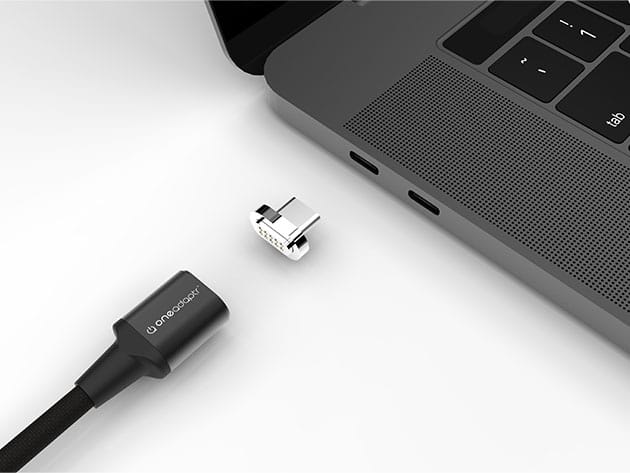


KEY FEATURES
We spend almost all day browsing through our phones and laptops…and these devices don’t last that long unless you charge ’em. This EVRI Magnetic Tip USB Cable changes the charging game. It supports up to 100W charging power for USB-C powered MacBooks, notebooks, Nintendo Switch, smartphones, and tablets. It also allows fast data transfer with up to 480mbps rate. With its breakaway magnetic tip, it prevents your MacBook and other devices from tumbling when tripped over. It’s also fully reversible so you won’t find the right side to connect. Truly convenient!
- Supports up to 100W charging power for both USB-C PD or standard 5V USB-C
- Allows up to 480mbps data transfer
- Breakaway magnetic feature prevents device from tumbling when tripped over
- Fully reversible & supports both power and data transfer when connected either side
- Broad compatibility on USB-C powered MacBook, notebooks, Nintendo Switch, smartphones & tablets
PRODUCT SPECS
Specs
- Color: black
- Materials: metal
- Cable length: 39.37″ (1m)
- Weight: 0.97 oz
- Input: USB C
- Output: magnetic USB C (Up to 100W)
- Data transfer rate: 480mb/s
- Magnetic tip
- Durable & convenient
- Manufacturer’s 1-year limited warranty
Compatibility
- USB-C powered MacBook/MacBook Pro, notebooks, smartphones, tabletss, & devices
Includes
- EVRI Magnetic Tip USB Cable for MacBook & USB-C Devices

Marco / admin / 30 Nov
Writing day to day ramblings about making money, business, technology, sharing awesome deals and everything else that I know I'll forget. Follow my personal blog https://marcotran.com.au
I've recently also turned Vegan and started this website Veggie Meals - check it out
"When technology speaks for itself, that is art" - MT
Affiliate Compensated: there are some articles with links to products or services that I may receive a commission.
OTHER ARTICLES YOU MAY LIKE
REVIEWING AND UNBOXING THE TOOCKI USB-C RIGHT ANGLE 1.2M CABLE
USB C cables are among the most ordinary accessories we own, yet they can make a surprisingly noticeable difference to how comfortable our devices are to use while charging. The Toocki USB C right angle cable is a good example of a simple accessory that tries to solve a very common irritation, because instead of […]
read more
QUICK FIX TO CHANGE THE MAX SELL POWER TO LESS THAN 500W ON THE DEYE INVERTER
There are many reasons a home owner or installer might want to place a tight cap on how much solar power is exported to the public grid. Some households live under a strict export cap imposed by their local distribution network operator, others want to reduce export to focus on self consumption and battery charging, […]
read more