Mini UV-C Sterilizer Light for Toilets & Trash Cans for $31
May 12, 2020 / by Marco / Categories : Business, deals, design, entrepreneur, website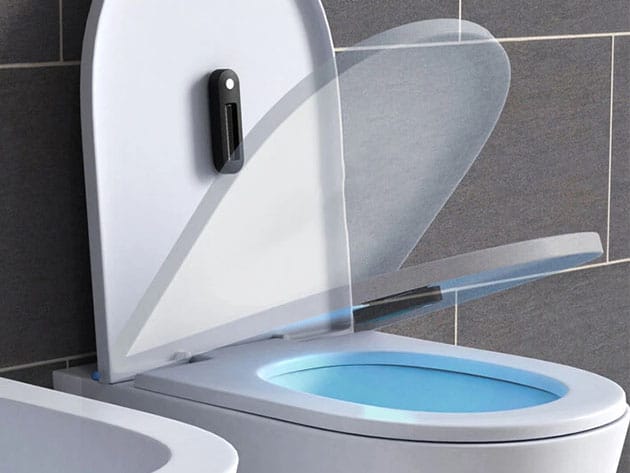


KEY FEATURES
Germs are everywhere — especially in garbage bins, toilet seats, and flush handles. Studies showed that millions of bacteria are lurking in these places, quickly transfers to your hands, and can cause serious health problems. These include Salmonella, E. Coli, and Flu Viruses, and more. Prevent the spread of contamination with this Mini UV-C Sterilizer Light. Using UV-C radiation with a wavelength of 200 to 275nm, it attacks the vital DNA of the bacteria directly, weakens their reproduction capability, and finally destroys them.
- Quarts Tube UV lamp, 9s to kill bacterias, 99.99% sterilization rate
- Long press to start disinfection, short press to stop ,simple to operate .
- Auto 5 minutes timer to complete the sterilization, energy-saving and secure
- Auto pause the sterilization process when the lip flap up 30 degree, continues when lip flap down
- Lightweight& compact, also suitable for other occasions like kitchen, cabinet,etc.
PRODUCT SPECS
Specs
- Color: black
- Materials: ABS, quarts
- Product dimensions: 4.92″ x 1.49″ x 0.71″
- Weight: 2.47 oz
- Battery capacity: 1,200mAh
- Input: DC 5V/1A
- Power: 3W
- Charging time: 2.5 to 3 hours
- Lamp wavelength: 200 to 275nm
- Manufacturer’s 1-year warranty
Includs
- Mini UV-C Sterilizer Light for Toilets & Trash Cans
- USB Charging Cable
- Fixed Bracket
- User Manual

Marco / admin / 30 Nov
Writing day to day ramblings about making money, business, technology, sharing awesome deals and everything else that I know I'll forget. Follow my personal blog https://marcotran.com.au
I've recently also turned Vegan and started this website Veggie Meals - check it out
"When technology speaks for itself, that is art" - MT
Affiliate Compensated: there are some articles with links to products or services that I may receive a commission.
OTHER ARTICLES YOU MAY LIKE
REVIEWING AND UNBOXING THE TOOCKI USB-C RIGHT ANGLE 1.2M CABLE
USB C cables are among the most ordinary accessories we own, yet they can make a surprisingly noticeable difference to how comfortable our devices are to use while charging. The Toocki USB C right angle cable is a good example of a simple accessory that tries to solve a very common irritation, because instead of […]
read more
QUICK FIX TO CHANGE THE MAX SELL POWER TO LESS THAN 500W ON THE DEYE INVERTER
There are many reasons a home owner or installer might want to place a tight cap on how much solar power is exported to the public grid. Some households live under a strict export cap imposed by their local distribution network operator, others want to reduce export to focus on self consumption and battery charging, […]
read more