MySql database replication
April 4, 2014 / by Marco / Categories : Technology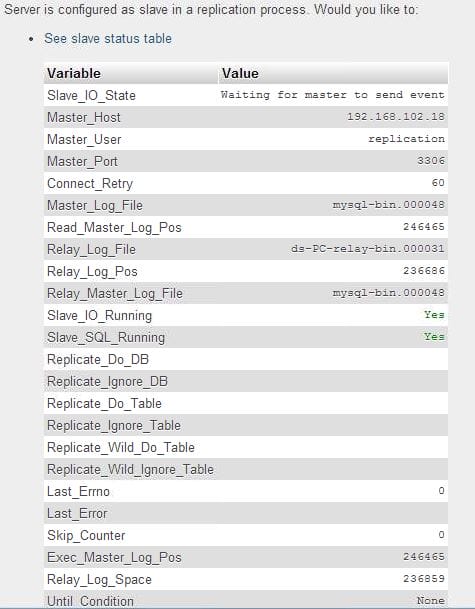
This was my first time setting up a MySql Database Replication instance between two servers. The instructions that I used from the mysql.com (How to set up Replication) was straight forward but there were a few gotcha’s which I decided to document in case I forget. If you’re an expert in this area and the instructions are incorrect please contact me so I can amend and update.
On the Master Server
This is the server which will have the master database. Master meaning that the information in this database will be replicated and copied to the slave database.
Create replication user account
Login to phpMyAdmin and click the Replication button at the top menu
Click on Add slave replication user
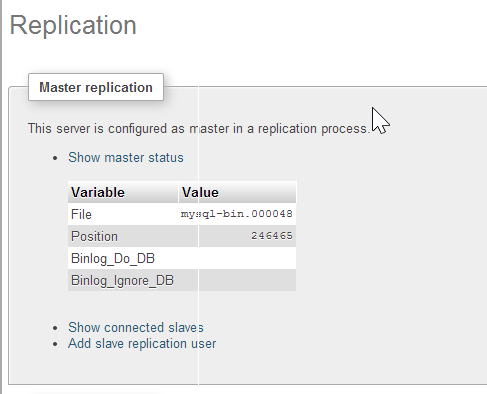
MySQL Add slave replication user
Enter all details (username, password)
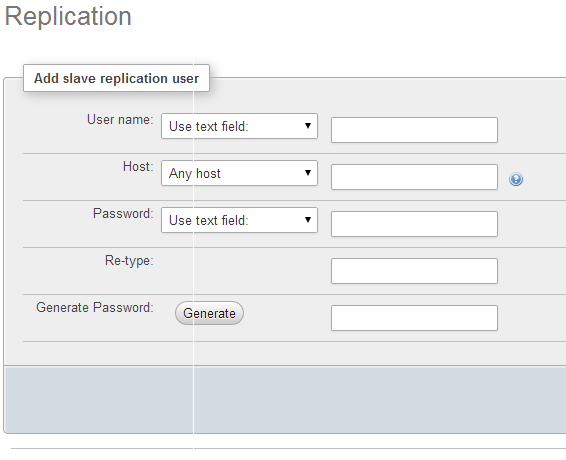
MySQL Add slave replication user details
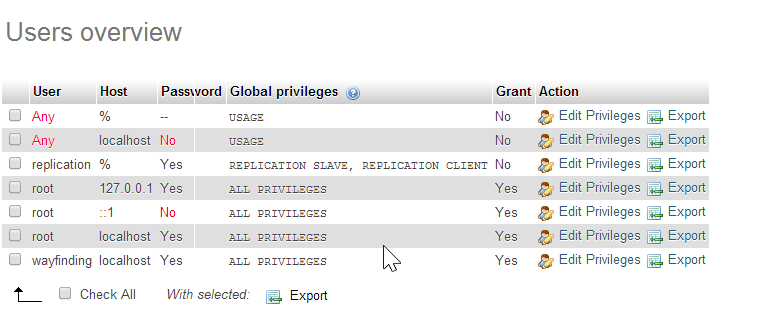
MySQL Add slave replication user list
This is the account that will be used on the slaves to connect to the master to authenticate and replicate the tables.
Export Database
According to the instructions from Mysql.com you need to flush the tables with read lock. To do this start mysql and enter:
mysql> FLUSH TABLES WITH READ LOCK;
Now if your database is empty I don’t believe you need to run this step.
Then you need to export the database by using the following command:
shell> mysqldump --all-databases --master-data > dbdump.db
It’s important you use –master-data so that it locks all tables in a seperate session. If you have a large database you can use the command gzip
shell> mysqldump --all-databases --master-data | gzip > dbdump.db
That’s pretty much all you need to do on the master server. You also need to make sure that your firewall allows incoming connection using port 3306.
Once you have configured the slave you can check the status on master to see which clients are replicating by clicking on Show Connected Slaves.
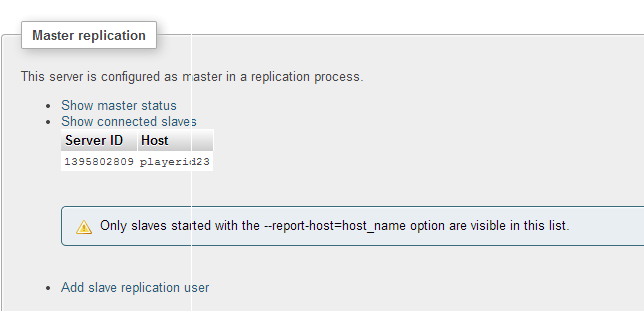
MySQL Show Connected slaves
On the slave server
You will need to import the mysql dump. So follow these steps
- Start the slave, using the
--skip-slave-startoption so that replication does not start. - Import the dump file:
shell>
mysql < fulldb.dump
Login to myphpadmin and click the replication button at the top.
Click configure
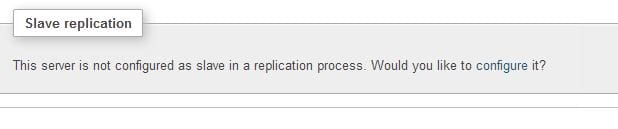
mysql slave replication configure
Enter the details that was used on the master server.

- mysql slave replication configure settings
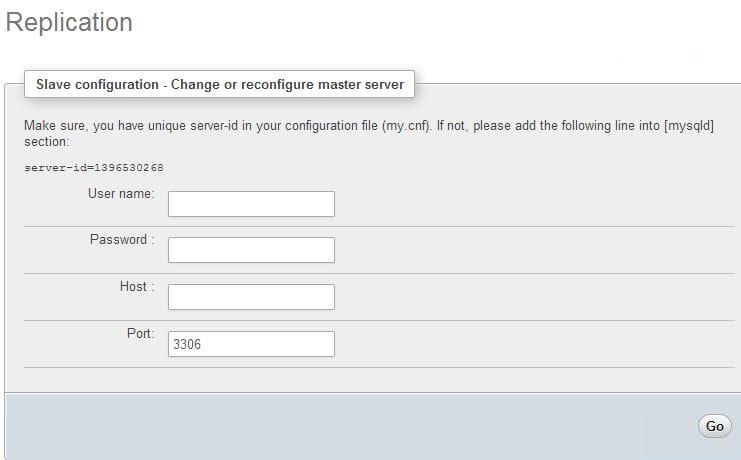
Click Go and check the slave status
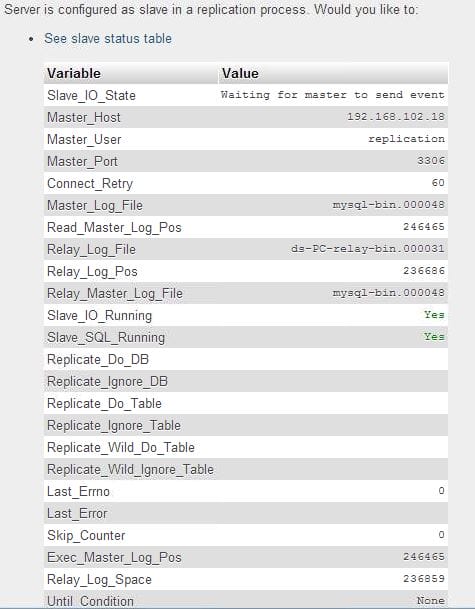
mysql slave replication check slave status
Once you have added the master settings you will have the option to check the master status
Add –report-host=host_name in the my.ini (I’m using WAMP). The hostname you can change to a unique word to identify your slaves.
I hope this has helped someone start replicating their mysql database. If there’s anything that I can improve in this post then please leave me a comment as I’m no expert in this area.
NOTE: I was getting some duplicate 1062 errors when Importing the dump file, so I just added this line to the my.ini file.
slave-skip-errors = 1062
Our Sponsors
- Advertise Me Pty Ltd

Digital Signage Solutions


Marco / admin / 30 Nov
Writing day to day ramblings about making money, business, technology, sharing awesome deals and everything else that I know I'll forget. Follow my personal blog https://marcotran.com.au
I've recently also turned Vegan and started this website Veggie Meals - check it out
"When technology speaks for itself, that is art" - MT
Affiliate Compensated: there are some articles with links to products or services that I may receive a commission.
OTHER ARTICLES YOU MAY LIKE

REVIEWING AND UNBOXING THE TOOCKI USB-C RIGHT ANGLE 1.2M CABLE
USB C cables are among the most ordinary accessories we own, yet they can make a surprisingly noticeable difference to how comfortable our devices are to use while charging. The Toocki USB C right angle cable is a good example of a simple accessory that tries to solve a very common irritation, because instead of […]
read more
SUPABASE BACKUP TUTORIAL: USE DBEAVER TO EXPORT YOUR DATABASE SAFELY
If you are building anything serious on Supabase, whether that is a client portal, a SaaS app, an internal dashboard, or even a small side project that is starting to get traction, having a reliable database backup process is one of those tasks that quickly moves from optional to essential. Supabase makes a lot of […]
read more